Skip to content

Our Method

Whole-body EMS challenges multiple muscle groups without heavy external weights. With up to 20 minutes of active training, each private session is adapted to your starting point, whether you're returning to exercise or making strength part of a busy week.

Who it's for

Three pathways, one method

The method is the same for everyone. These are the three places people most often begin.

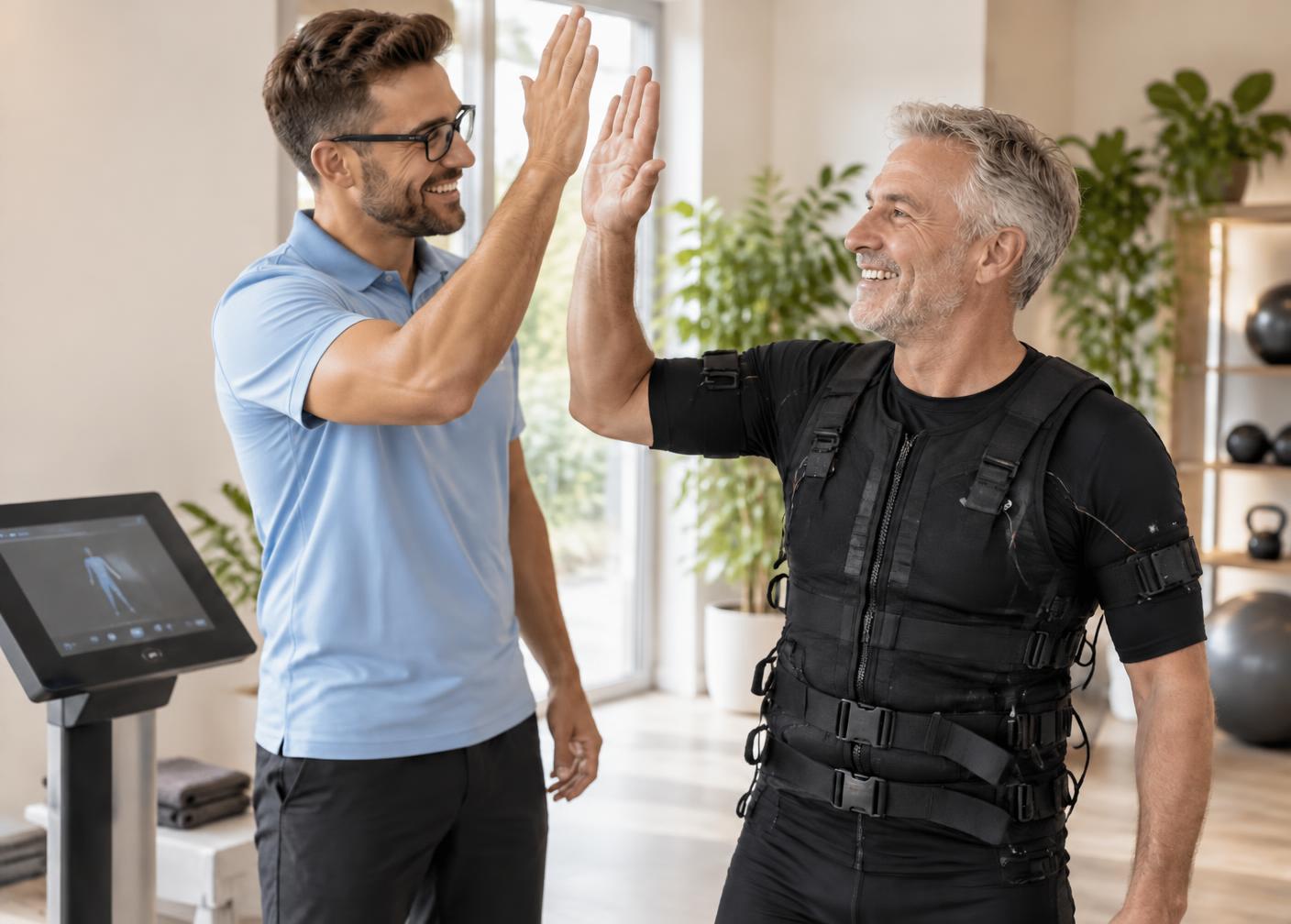
A trainer and an older client wearing an EMS training suit celebrating with a high-five in a bright studio

Pathway 01

Rebuilding strength after muscle injury or persistent backache

This pathway is for muscle issues and back tension — muscles that have weakened, tightened or gone quiet after a period of pain, strain or time away from training. It is not for skeletal or bone injuries: where bone is involved, advice from your healthcare professional comes first.

The catch-22 is familiar. The supporting muscles need strengthening, but they are weakened, stuck or inhibited — and exercising or lifting weights brings the pain back. So the muscles stay weak, and the cycle continues.

EMS breaks the cycle gently. Controlled impulses reach the deep supporting muscles directly, re-awakening and strengthening them while your trainer guides you through simple, comfortable movements. There are no heavy external weights to load the skeleton or compress the joints, so the work can begin from where you are today.

Suitability is assessed before you start. This is strength training, not rehabilitation or medical treatment, and it does not eliminate joint loading or risk. Some circumstances require medical clearance.

Read the science & safety guidance

The studio lounge with a cream sofa, plants and warm lighting, looking through arched glass doors into the training room

Pathway 02

Strength for full, busy lives

You already know exercise matters. What's harder is finding the time: demanding jobs, large families and active community or religious commitments mean hours in a gym are simply not realistic. That isn't a lack of discipline, and there is no guilt to carry here.

Whole-body EMS gives you a focused, low-sweat workout: up to 20 minutes active, 30 minutes in and out, with all the major muscle groups stimulated at once. No circuit to move around and no machines to wait for.

The aim is to protect the posture, spinal stability and everyday energy that a full week runs on — strength that fits the life you already have, rather than asking you to build a new one around it.

Up to 20 minutes active · 30 minutes in and out. Your first appointment lasts 45 minutes, so there is time to explain EMS and carry out your initial assessment.

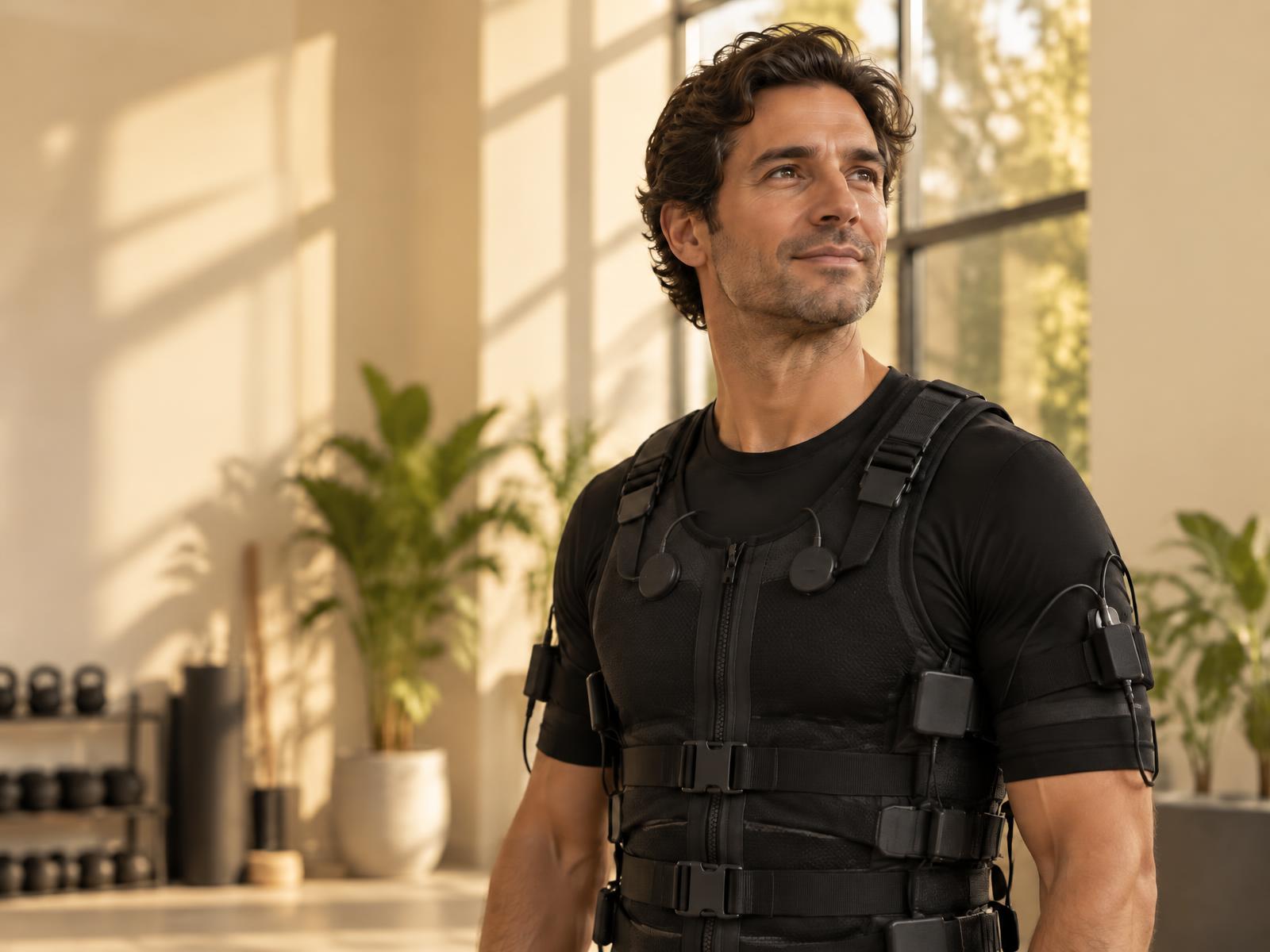
A man wearing an EMS training suit standing tall with his hands on his hips in a sunlit studio

Pathway 03

Longevity & everyday balance

Strength for the years ahead is not about appearance. It is about balance, stability and complete neuromuscular awareness — your body knowing where it is in space and moving as you intend.

EMS trains the deep stabilising muscles around the hips, core and back that keep you upright and steady. Strengthening them helps counter the natural, age-related decline in strength and muscle, and preserves the everyday abilities that matter: climbing stairs, carrying shopping, getting up from a low chair, moving with confidence.

You start from your own starting point. Movements and intensity are adapted to you, and we review progress against the activities that matter most to you.

Adults aged 18 and over; suitability is assessed before training. This is strength training, not treatment — improved balance or independence cannot be promised.

The method

How every session works

Up to 20 minutes active 30 minutes in and out

Your EMS workout lasts up to 20 minutes, but we allow 30 minutes for your appointment.

That includes around five minutes beforehand to suit up and prepare for your workout, and five minutes afterwards to change and get ready to leave.

Your first appointment lasts 45 minutes, giving us additional time to get to know you, understand your goals, carry out your initial assessment and introduce you to EMS training.

  1. Assess

    We begin with your goals, injury history, joint mobility and any guidance from your healthcare professional, alongside key measurements of your starting strength. We assess suitability and agree comfortable movements before training; some circumstances require medical clearance.

  2. Train

    Your trainer guides simple movements while controlled electrical impulses stimulate multiple muscle groups, including the trunk and core. You do not need heavy external weights. Movements and stimulation are adapted to your comfort and ability throughout the session. This is strength training, not treatment, and it does not eliminate joint loading or risk.

  3. Review

    We review progress against the everyday activities that matter to you, such as climbing stairs, carrying shopping or feeling more confident moving. Periodic measurements and conversations help us recognise changes in strength, adjust your training and decide where to focus next.

More strength. More capability. Onwards and upwards.